Otto von Bismarck
-
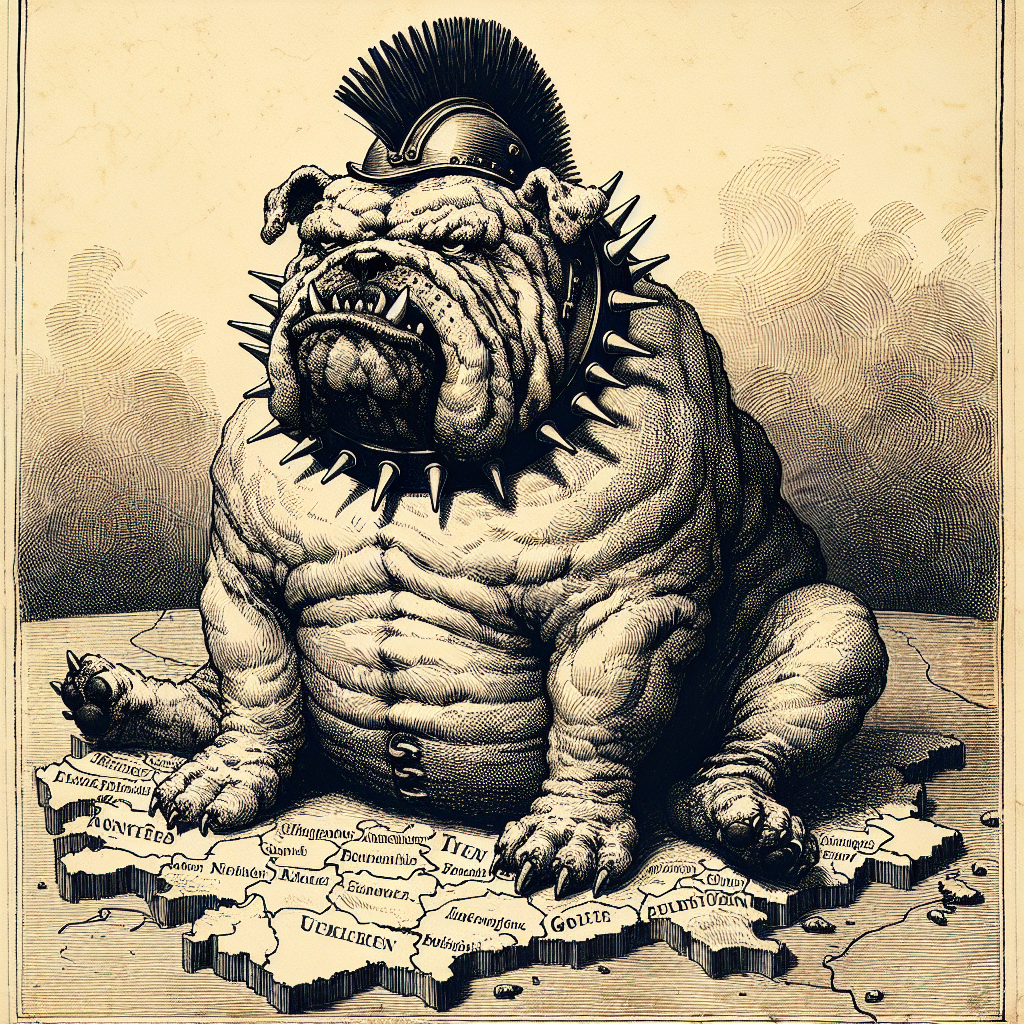
We arrive at #EuropeanBios entry 72, Otto von Bismarck, a total asshole whose utter lack of principles and unquenchable thirst for power saw him endlessly switch sides on every issue while slowly accumulating influence, in the process accidentally creating modern Germany.
-
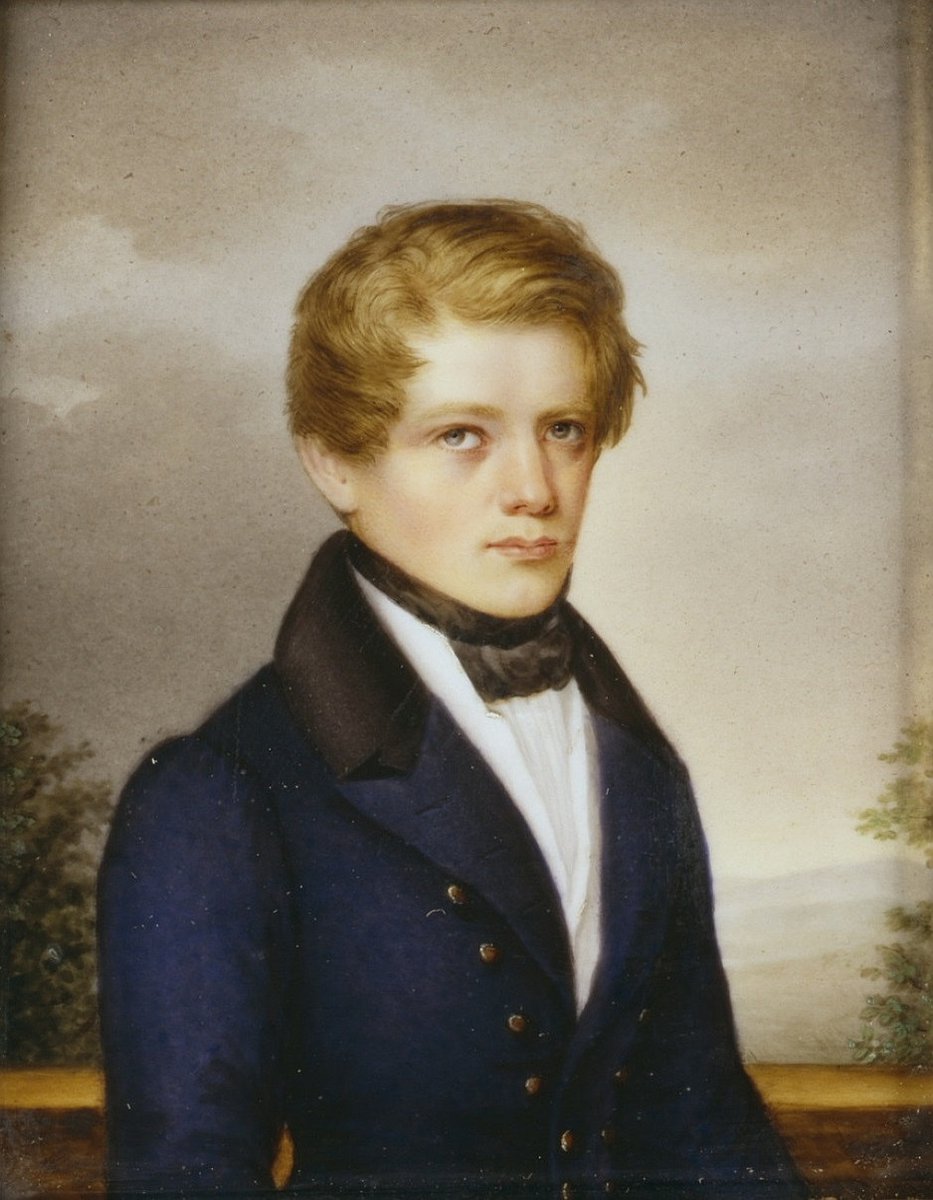
Portrait of Otto von Bismarck as a child, showing the future "Iron Chancellor" of Germany Portrait of young Otto von Bismarck, public domain -
My own historical education at school in the Caribbean was, for well-meaning but ultimately unhelpful anti-colonialist reasons, entirely devoid of European history, so this project has really filled in some big blanks for me, in this case answering: how did Germany come to be?
-
The story of Germany starts with huge nerd Charlemagne, who got annoyed at everything being disorganized and backward and took over all of Europe as a sort of extended tidying-up exercise, creating the Holy Roman Empire (neither holy, nor Roman)
-
Charlemagne's work slowly fell apart over the next thousand years (but still, pretty good going!) leaving a mess of tiny little German states ruled by various nobles and priests by the end of the 1700s. There are so many tiny little states, the map looks like somebody barfed.
-
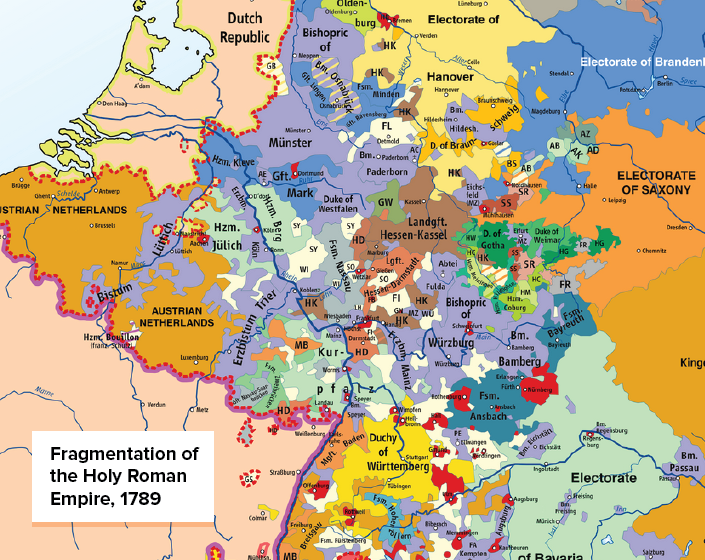
Map showing the fragmentation of the Holy Roman Empire in 1799, with hundreds of tiny German states — what Bismarck would later spend his career turning into a single nation Holy Roman Empire fragmentation map via Wikimedia Commons (CC BY-SA) -
The situation was improved, strictly from the perspective of somebody who wants a simpler map, when excellent general and extremely big gay Frederick the Great took over big chunks of Europe, creating proto-Germany, the kingdom of Prussia:
-
Which brings us to Bismarck, who fought a number of wars during his tenure, probably most notably (in terms of territorial gain) the Austro-Prussian war of 1866, where everybody in blue ganged up on everybody in red and Bismarck kept all but the lightest blue afterwards:
-
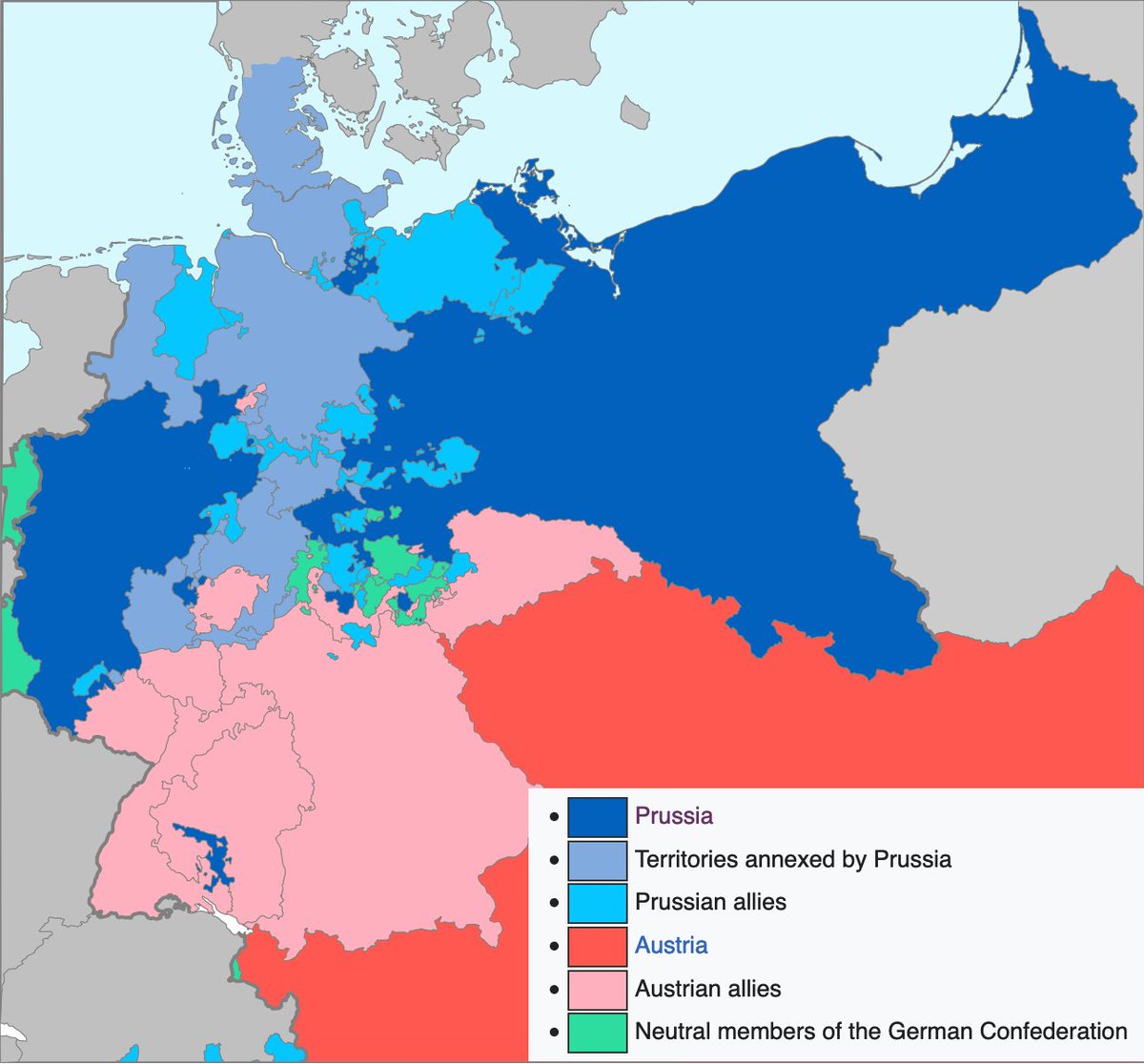
Map of the Austro-Prussian War of 1866, showing Prussia (blue) versus Austria (red) and their allies, a conflict Bismarck engineered to expand Prussian dominance Austro-Prussian War 1866 map by Koryakov Yuri via Wikimedia Commons (CC BY-SA 3.0) -
Then through wheedling diplomacy and lies and threats and more lies he eventually maneuvered all the rest of the German states that were still around to unify into what looks (with apologies to Alsace–Lorraine) roughly like Germany does today. Tidy; Charlemagne would've approved.
-
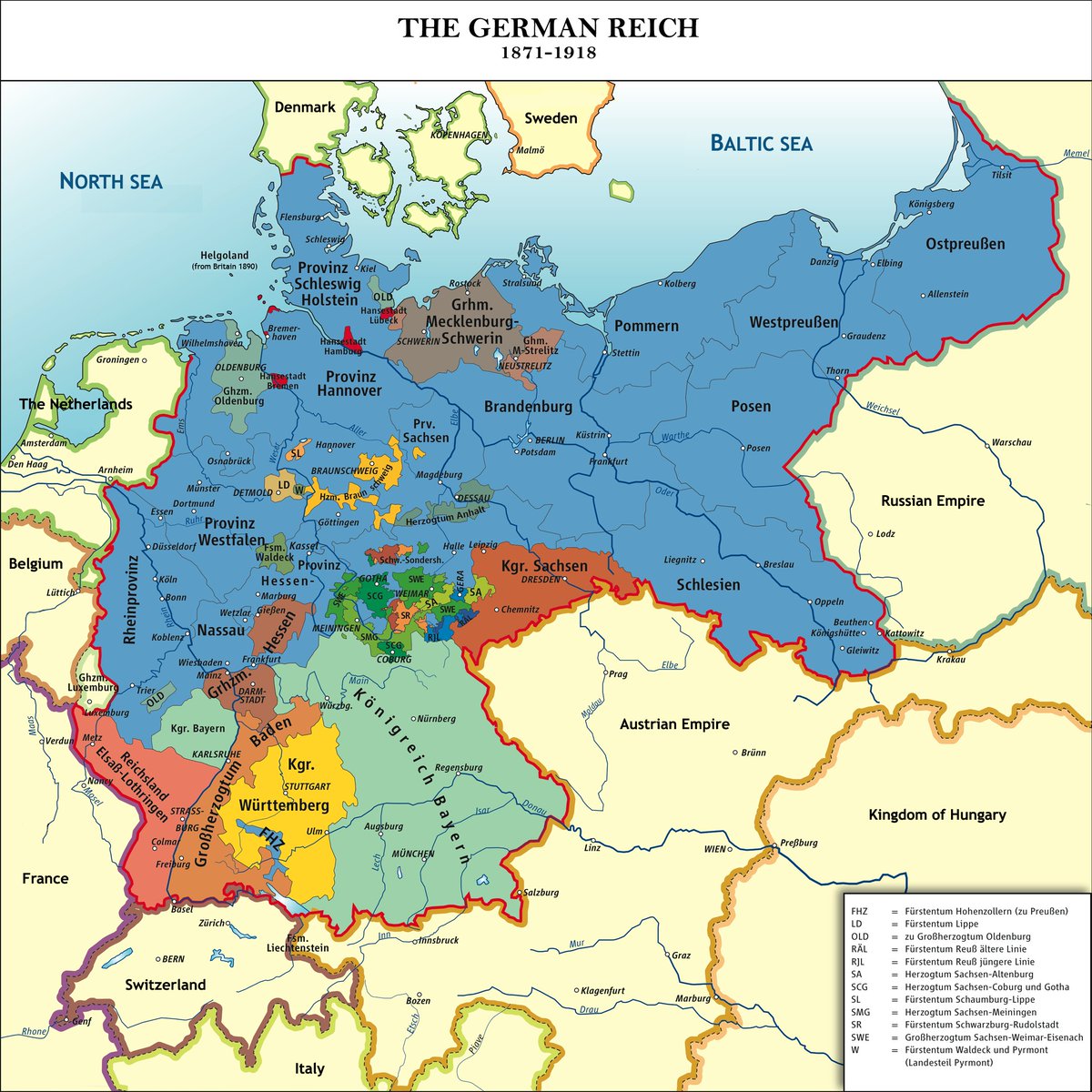
Map of the unified German Reich 1871-1918, the nation state Bismarck created through war, threats, and elaborate diplomatic manipulation German Reich map via Wikimedia Commons (CC BY-SA) -
Bismarck was Prussian and made Prussia bigger and bigger until eventually it was Germany™ Brought To You By Prussia™, notably excluding Austria, which at the time could have gone either way, and didn't end up part of Germany mostly because Bismarck didn't want to share power.
-
All of this was news to me and makes later events like Hitler annexing Austria with surprisingly little fuss make way more sense in context, since folks alive in 1938 would have vague memories of Austria almost becoming part of Germany anyway and "Germany" being not well-defined.
-
(All of the above of course is a RADICAL over-simplification of what actually happened, I am not going to attempt to accurately account for two centuries of nuanced geopolitics in a few tweets, I'm going for broad strokes here, apologies and also get off my back)
-
So with the geopolitical recap out of the way let's get back to the actual bio. Otto Eduard Leopold von Bismarck was born in 1815 in the then-Prussian town of Schönhausen. His family were hereditary nobility known as Junkers, well-off but financially somewhat precarious.
-
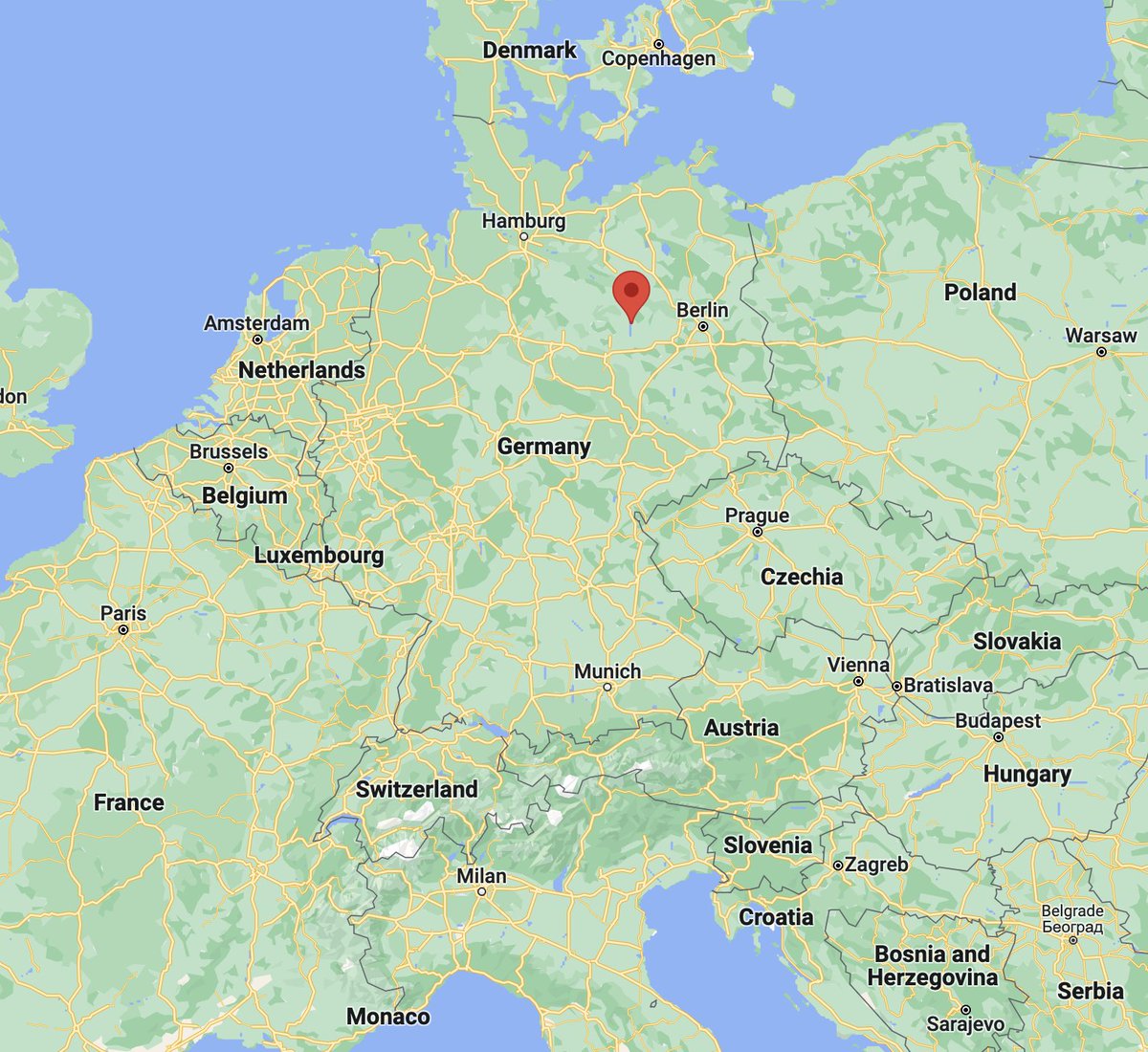
Map marking Schönhausen in Prussia (now Germany), the town where Otto von Bismarck was born in 1815 into a family of Junker nobility Google Maps data © Google -
The posh side was his dad; his mother was from a non-noble middle class family who didn't take their largely meaningless nobility seriously. Otto disliked this a great deal and always identified first as a Junker, resulting in him idealizing his father and rejecting his mother.
-
His status as a Junker was also a political asset that he made great use of, very roughly analogous to Republican politicians pretending to be honest farmers or Reagan pretending to be a cowboy. It made people think of him as a wholesome, traditional, "real" German guy.
-
He was however no country squire but extremely well-educated in the extensive Prussian university system. It was in college that he met the two men widely regarded as his only actual friends: the American John Motley and the German Alexander von Keyserling.
-
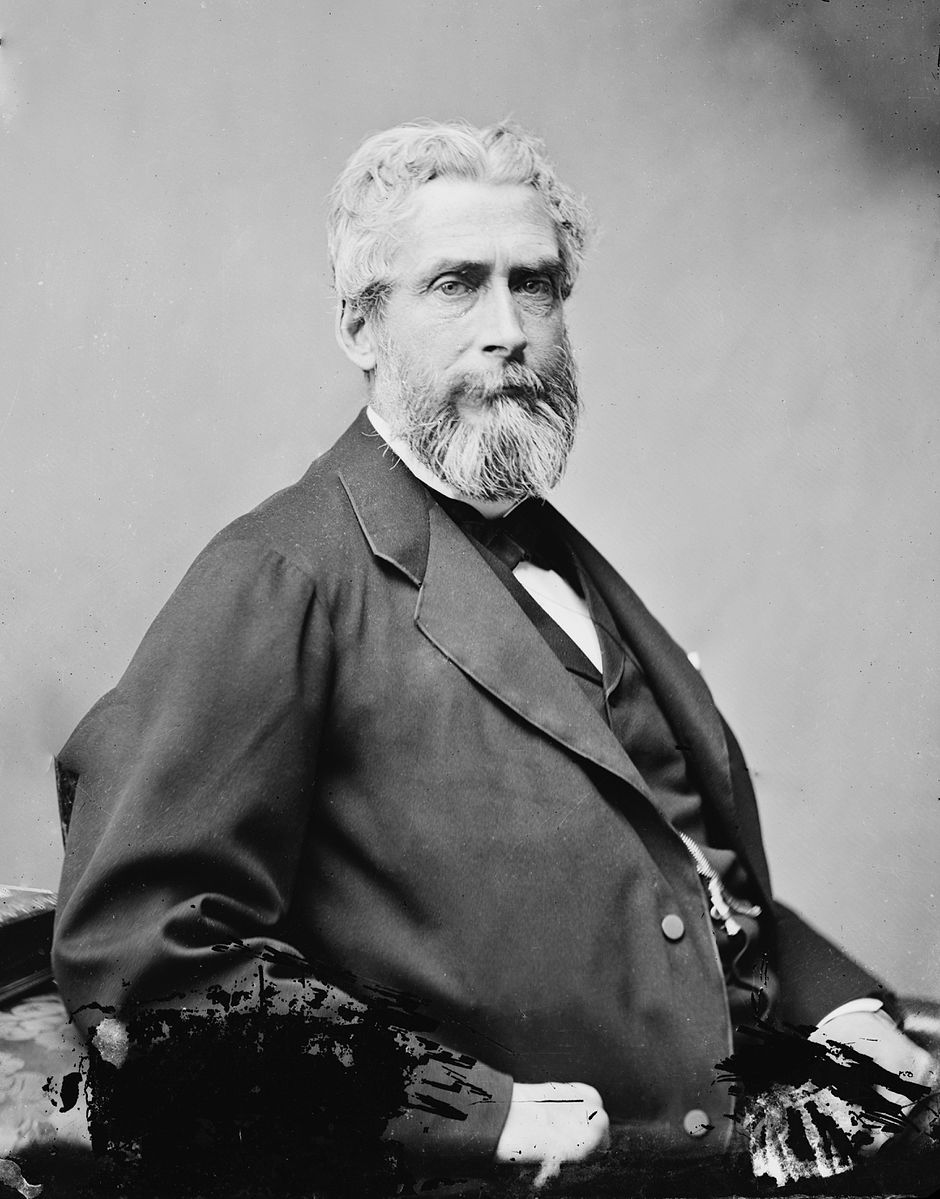
John Lothrop Motley, American historian and diplomat, one of the two men widely considered Bismarck's only true friends Photograph of John Lothrop Motley, public domain -
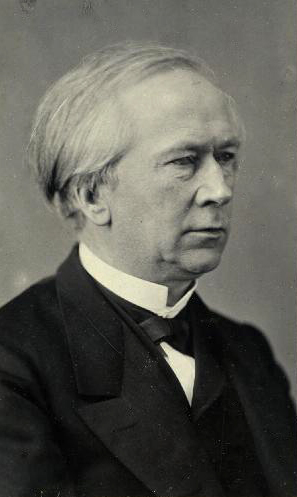
Alexander von Keyserling, German naturalist and Baltic nobleman, the other of Bismarck's only two genuine friends from his college days Portrait of Alexander von Keyserling, public domain -
The depth and importance of his relationship with these guys is hard to overstate. Otto was a sociopath who picked up and dropped people as suited his aims, with these two being almost the sole exceptions. He maintained warm relations with them until the very end of his life.
-
As a teenager and at college he was a notorious womanizer and a heavy drinker with a penchant for violence: in his first 3 terms at college he fought 25 duels (with swords, not guns, explaining his survival). He also spent lavishly, for which he was admonished by his parents.
-
He lived his entire life in a dual identity: he thought of himself as a simple country guy, a noble farmer who yearned for the quiet life of the countryside. But whenever he actually got that he was bored out of his mind: what he *actually* liked was life in the big city.
-
Key to his split personality was his attitude to power: he constantly said, and may even have believed, that he was a servant of Prussia and reluctantly did his political duty, but really wanted to return to his quiet country life. In reality, he was ambitious and mad for power.
-
His route to power is long and convoluted. In summary: he used his family connections to get elected as a local politician, made a name for himself with fiery speeches, became a diplomat and then Prussian ambassador to Russia and then France, making valuable connections.
-
In 1862 the king of Prussia got into a political crisis over his budget and decided that the only person who could persuade everybody to get back in line was Bismarck, who in exchange for solving this problem for the king demanded and got sole control of Prussia's foreign policy.
-
This made Bismarck, age 47, until then Ambassador to France, suddenly Minister President and Foreign Minister of Germany. Does that seem a weirdly sudden promotion? Because it was. It is a testament to his amazing ability to manipulate people.
-
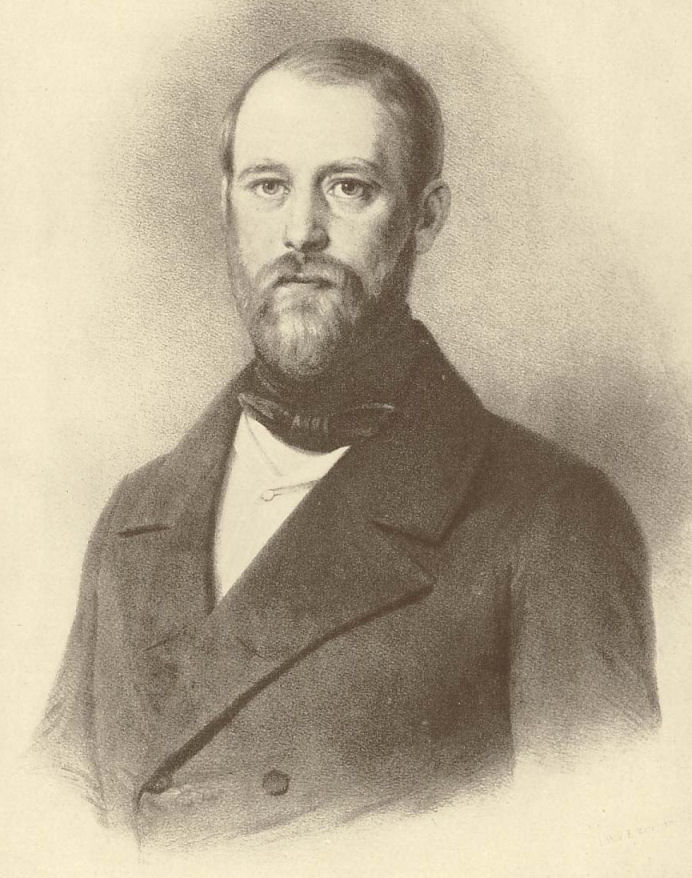
Portrait of Otto von Bismarck as a young politician, around the time he became Minister President of Prussia Portrait of Otto von Bismarck, public domain -
It was around this time he made one of his most famous speeches, about the necessity of war to achieve political goals, known as the "blood and iron" speech despite, in the speech, his actually using the phrase "iron and blood":
-
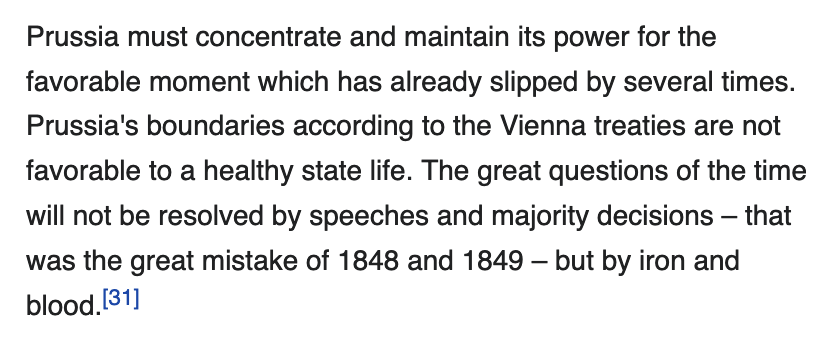
Excerpt from Bismarck's famous "Blood and Iron" speech (1862), in which he declared that political questions are decided not by speeches but by "iron and blood" Otto von Bismarck, "Blood and Iron" speech, 1862, public domain -
This speech in which he basically threatened all of Prussia's neighbors with war caused a great deal of controversy. To make sure it didn't get him into trouble with the king, he intercepted the king's train so he could be be the first to tell him about it and frame it properly.
-
This kind of extremely practical micro-manipulation -- if you are the first person to tell the story, your listener is most likely to accept your version -- is a great example of the million little tricks of which he was uniquely in history a master.
-
Through political networking but mostly through this kind of manipulation he went from important diplomat to de facto ruler of Germany. In theory the king was in charge and Bismarck was his servant but over the course of decades Bismarck slowly shifted the balance of power.
-
Through all of this he was a political chameleon. Sometimes pro-royalty, sometimes against it, sometimes pro-democracy, often against it, sometimes pro-religious, sometimes openly atheist, he ruthlessly allied with whoever would help him take his next step and dropped them later.
-
The result was that during Bismarck's career Prussia changed from being ruled by a king who consulted an elected parliament to the king being told what to do by Parliament but actually everybody being ruled by Bismarck, who skillfully played them off against each other.
-
As a feat of political maneuvering it's truly breathtaking. Every event, every crisis, Bismarck played eight-dimensional chess, juggling relationships with parliament, the king, the German micro-states and others, keeping them happy but always increasing his own power.
-
It was also very haphazard. Bismarck didn't really have a plan, or an ideology, other than "Otto von Bismarck should be in charge". He unified Germany into an empire, but it was never an explicit ambition of his. Germany was just a side effect of his actual goal: personal power.
-
It's hard not to be impressed. He was a Michelangelo of lying, a Mozart of emotional manipulation, the Shakespeare of stabbing people in the back. He was indisputably a genius of getting people to do what he wanted, but getting people to obey him seemed to be his only real goal.
-
In terms of how he actually did this, there was no single trick. He was clearly a magnetic personality in person. He was good at speeches. He was unabashed about emotional manipulation, throwing crying fits or screaming and breaking things and endlessly threatening to resign.
-
The political system at the time just wasn't prepared for somebody like him. Europe was in transition from royalty ruling by force of arms, to ruling by hereditary right, to shaky early democracy, and it all relied on people being polite and playing by the rules. He did neither.
-
He slowly amassed titles, bestowed upon him by his pet king, Wilhelm 1. He became first a Count and then a Prince. This pleased him primarily because it meant his wife became officially royalty and so the ladies of Wilhelm's court could no longer look down on her.
-
His marriage was a practical affair, his wife chosen it seems mostly for financial reasons, and he manipulated her like he manipulated everyone else. She was religious, and he an atheist, but whenever he was writing to her he would reference god and religion to keep her happy.
-
He had an extra-marital affair with a Russian noblewoman, Princess Katharina Orlova, and in another breathtaking example of his powers of personal manipulation he told his wife all about it and somehow got his deeply religious, conservative wife to be just fine with that. Wild.
-
It all finally came to an end when Wilhelm 1 died in 1888. Now 73, Bismarck's waning energy and health meant he could not properly establish an emotional hold on the king's successor the way he had the previous king. After 2 years of increasingly shaky control he was fired.
-
Kicked out of power by the new king, Wilhelm 2, he absolutely did not go quietly. Officially retired to the countryside to write his memoirs, he relentlessly sniped from the sidelines about how things were being run without him until he died, still bitter, 8 years later.
-
Bismarck's legacy is... well, modern Europe, in as much as modern Europe is the result of the events of World War 2, which in turn was a consequence of World War 1, which was caused in no small part by the ambitions of Wilhelm 2, in charge of a powerful, united Germany.
-
As legacies go, "a key player in setting the stage for the two deadliest wars in human history" is... not great. Obviously Bismarck isn't solely responsible, and he's not Hitler's dad or anything, but it's also undeniable that without him Europe would be a very different place.
-
Bismarck's legacy is like the man himself: impressive in scale, indisputably the result of a talent operating at a level seen only a handful of times in history, and yet horrible. He was awe-inspiringly competent, but what he was competent *at* was being a terrible person.
-
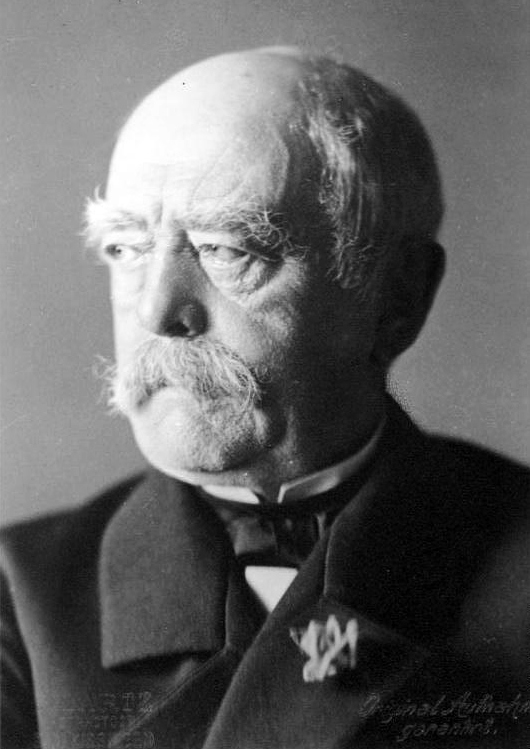
Photograph of Otto von Bismarck in later life — the "Iron Chancellor" who unified Germany and whose legacy helped set the stage for World War I Photograph of Otto von Bismarck, public domain
- Previously: Darwin
- Next: Ada Lovelace
- Full list
Text and images copyright © 2020-2023 Laurie Voss
except where indicated
except where indicated